Database model and type
Database model

What kind of data do we need to store?
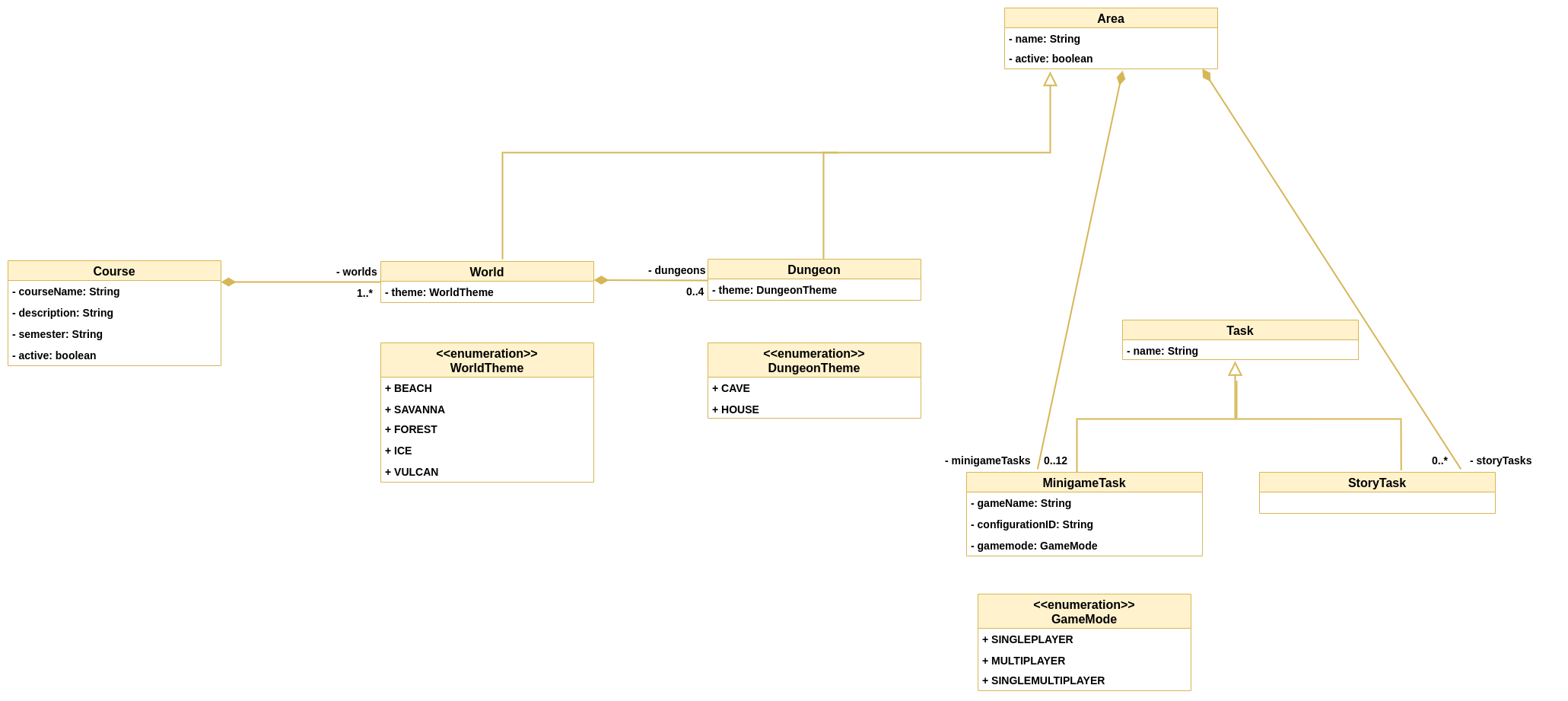
Configuration specific data
configure worlds
name
spawnpoint
active or not
dungeons
tasks
configure dungeons
name
spawnpoint
active or not
tasks
configure tasks
name
game
configurationId
Player-specific data
userId
username
unlocked areas
completed tasks
completed dungeons
location of the player
knowledge level
[carried items]
[life points]
Experience System
x is maximum knowledge that can be achieved for this task
The player receives a share of 2% of x for every score under his highscore
e.g.
1st attempt: Player achieves 60%
60% is stored for this task as highscore in overworld-backend
Player gets x * 60% + x * 0% * 2% knowledge level
2nd attempt: Player achieves 50%
no new highscore scored
Player gets x * 0% + x * 50% * 2% knowledge level
3rd attempt: Player achieves 80%
80% is stored for this task as highscore in overworld-backend
Player gets x * (80% - 60%) + x * 60% * 2% knowledge level
What kind of databases exists?
SQL (Structured Query Language)
MySQL or PostgreSQL
relational database
structured through relational data
SQL is a good choice when working with related data.
NoSQL
Redis or Memcache
non-relational database (key-value)
allow a dynamic schema for unstructured data
NoSQL is good when it’s more important that the availability of big data is fast
NoSQL is also a good choice when there are large amounts of (or ever-changing) data sets or when working with flexible data models or needs that don’t fit into a relational model
What should we use?
For Configuration specific data
clear point for SQL, the areas, dungeons, and tasks are all in relationships and do not get often updated.
For Player-specific data
the player-specific data should also be stored in a SQL database, there are relations from unlocked areas to the defined areas, completed dungeons, tasks, …
Result
SQL is the favorite here because of the many relations we have. For our project, it does not make a difference what type of database system we use because the performance will be similar and the features of all databases are sufficient for us.
Result after Review
An ORM should be used. We have selected PostgreSQL as our database.